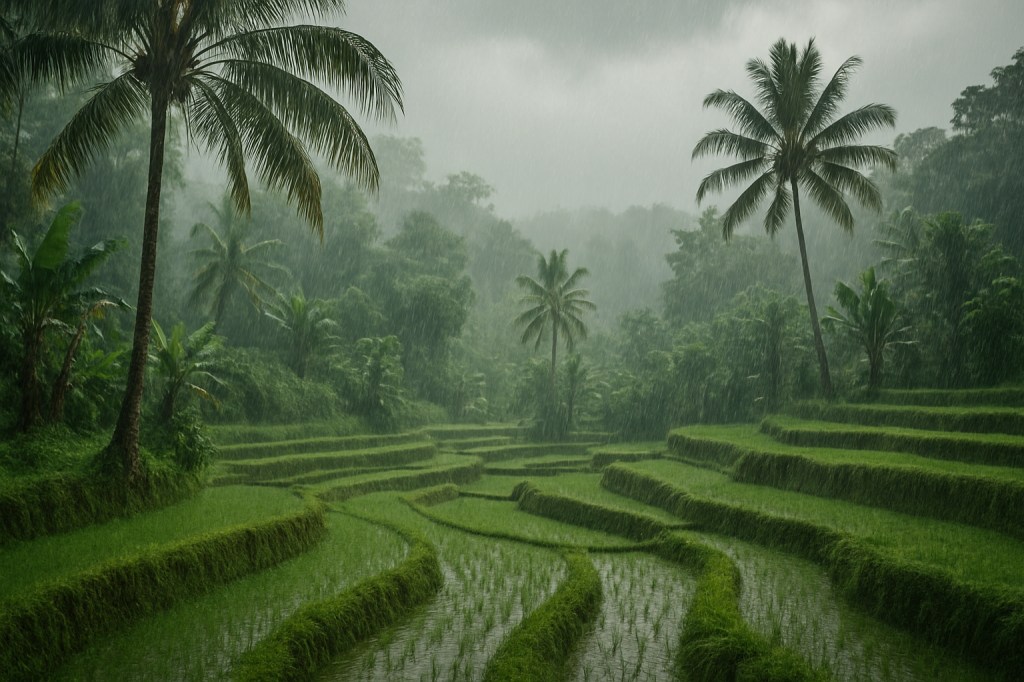
Alright, lemme tell you straight — if you’re wondering what Bali weather in February feels like, you’re not alone. I get asked that all the time. Tourists hop in my van, first thing they say is, “So… is it gonna rain all day today?” And yeah, it’s February, so rain? Yep, it’s likely. But does that mean your Bali trip’s ruined? Nope. Not even close.
Check also: Things to Do in Bali
I’ve been driving tourists around this island for over 15 years now. February is actually one of the most misunderstood months. People see “rainy season” and start panicking like we’re talking monsoon apocalypse or something. Chill. Bali rain in February has its mood swings, sure, but once you get used to it, you might actually start enjoying the rhythm of it.
What Kind of Rain Are We Talking About?
First off, lemme break the rain thing down for you — it’s not like in Europe or Australia where it might drizzle all day, non-stop. In Bali, rain comes and goes. One moment it’s blazing sun, and the next — boom — tropical downpour. But it’s usually short and sweet. Thunderstorm hits hard for like 30 minutes, maybe an hour. Then it’s done, streets steam a bit, and the island smells fresh like lemongrass and wet earth.
Mornings in February? Surprisingly dry, most of the time. That’s when I tell my guests, “We go early, ya? Beat the rain.” We start around 7 or 8am, knock out the waterfalls, temples, or rice terrace walks, and by the time the clouds start throwing tantrums in the afternoon, we’re chillin’ in a café or a spa.
Now, yeah, sometimes the rain overstays its welcome — especially late afternoon and evenings. But if you’re staying in places like Ubud or Seminyak, there’s still plenty to do indoors. Cooking class, batik workshop, fancy massage places — rain ain’t stopping that.
Humidity? It’s a Whole Mood
Now let’s talk about the real beast — humidity. February is sticky, no lie. We’re talking 80-90% humidity on average. You take a shower, towel off, step outside — and boom — you’re sweaty again. It’s like the air hugs you, in the clingy way. So wear light, breathable clothes. Linen shirts, loose cotton dresses, stuff that don’t trap sweat.
Locals like me, we’re used to it. I grew up in this heat, so I got no problem walking around in flip-flops and a faded tee. But if you’re from a cooler climate, your body’s gonna take a few days to adjust. Don’t fight it — stay hydrated. Coconut water works like magic, and it’s sold on pretty much every street corner.
How Hot Is It Really? Let’s Get Specific
You’re lookin’ at average temps around 26°C to 30°C (that’s 78°F to 86°F). But factor in the humidity, and it can feel like 35°C (95°F) or more. That’s why I always say — do the outdoor stuff early. Wanna hike Mount Batur? Book the sunrise trek, not the afternoon one unless you enjoy feeling like a boiled egg.
One of my guests last year, British guy, tried walking around Uluwatu mid-day in February. Came back red-faced, shirt soaked, and said, “Mate, it’s like walking through a sauna in jeans.” Lesson learned.
Is February Low Season in Bali? Yes — And That’s a Good Thing
Here’s the thing most tourists don’t realise — February is part of Bali’s low season. Except around Chinese New Year — that week gets busy. But apart from that, crowds are way less intense. No elbowing your way through Tanah Lot. No hour-long wait for that Instagram swing in Tegalalang. You get the good spots, with less hustle.
Hotels and villas? They drop their rates. I’ve seen some fancy 4-star places in Seminyak or Ubud go for under $80 a night. Even private pool villas are more affordable. My cousin runs one in Canggu — usually packed in July — but in Feb, he’s got more availability and throws in extras like airport pickup or floating breakfast.
Even driver rates (like mine) are more flexible. I don’t hike prices in February. Why would I? I’d rather have guests exploring with me than sitting in their hotel because someone scared them off with “rainy season horror stories.”
What You Can Still Do (Even If It Rains)
Alright, lemme break this down Bali-driver-style — these are some of my favourite things to do in February:
- Waterfalls like Tibumana or Tukad Cepung — more water = more drama. Sure, the trails get muddy, but with the right sandals and a little care, you’re good. And hey, fewer tourists means better photos.
- Hot Springs near Mount Batur — rainy season + warm water = heaven. Trust me, sitting in Toya Devasya with steam rising while it drizzles lightly? That’s proper Bali magic.
- Temple visits — places like Tirta Empul or Goa Gajah are peaceful when it’s quiet. Bring a sarong and embrace the cultural vibes.
- Balinese cooking classes — indoor, air-conditioned, and tasty. Plus, you’ll learn why our sambal is better than anything you get back home.
- Massage and spa time — what better excuse to pamper yourself than “Oh no, it’s raining. Guess I’ll get a two-hour Balinese massage again.”
One of my guests — a digital nomad from Germany — once told me February became her favorite month because she could work in the mornings, explore between showers, and spend rainy evenings eating satay in warungs with zero tourist chaos.
But Can You Still Hit the Beach?
Yes, but with a lil’ caution. Some beaches can get debris from the ocean currents during February — especially on the southern and western coasts like Kuta, Seminyak, and Canggu. The tide brings in trash sometimes, sadly. But beaches like Nusa Dua or parts of Sanur? Cleaner, calmer, and still swimmable.
And if you’re into surfing, guess what? February can be solid for surf on the east coast — places like Keramas or Serangan. Water’s warm, waves are fun, and lineups are less crowded. I’ve had Aussie clients book whole weeks just to surf in February, and they don’t mind a lil’ rain.
February Festivals and Local Happenings You Shouldn’t Miss
Now this one’s important. February isn’t just rain and quiet beaches — it’s full of cultural stuff too. Depending on the Balinese calendar, you might catch Galungan or Kuningan falling in Feb. These are big, colorful Hindu holidays. You’ll see bamboo poles (penjor) on the roads, everyone dressed in traditional outfits, and offerings everywhere. Respect the customs, take photos, but always ask before entering temple ceremonies.
Oh and yeah, sometimes Chinese New Year lands in February. If that’s the case, Bali — especially places like Sanur or Nusa Dua — lights up with lion dances, fireworks, and special menus at Chinese-owned restaurants. A bit more traffic that week, but also lots of color and energy.
One time, I had a Singaporean family who came just for CNY celebrations — they loved how Bali blends cultures. We even got them invited to a local temple event. They still send me WhatsApp messages on every Chinese New Year.
What to Pack for Bali in February
Alright, if you’re still with me, lemme save you some headache — pack smart.
- Lightweight clothes that dry fast. I’m talkin’ shorts, tanks, airy dresses.
- A good rain jacket or poncho — not those thin ones that rip in a breeze.
- Waterproof sandals or flip-flops. Don’t bring your fancy white sneakers. They’ll be brown after one rice terrace walk.
- Dry bag or plastic pouch for your electronics. Especially if you’re riding scooters or doing boat tours.
- Insect repellent. After the rain, mosquitoes love to party.
Oh and don’t forget sunscreen. People forget that it still gets UV-heavy even when it’s cloudy. I’ve seen more red faces than a chilli warung after people assume February sun can’t burn.
Is It Worth Visiting Bali in February? Let Me Be Real With You
Yes. 100% yes. But only if you come with the right mindset. February isn’t postcard-perfect sunshine every day. But it’s authentic Bali — raw, lush, slower-paced. The rain makes the rice fields greener. The air feels thicker, alive. You’ll hear frogs at night, smell incense mixing with the scent of damp earth, and maybe find yourself enjoying a slower kind of travel.
You won’t get the loud beach club vibes like in August. But you’ll find connection — with locals, with nature, and maybe with yourself. One of my clients — a yoga teacher from Canada — once told me February in Bali made her stop rushing through life. She ended up staying two months instead of two weeks.
Real Talk About Road Conditions During Bali’s February Rain
Now listen, since I’m your Bali private driver in this chat — we gotta talk roads. February rain and Balinese roads don’t always get along, ya know? Especially in rural areas or up in the mountains near places like Kintamani or Sidemen. When it rains heavy, the roads get slick, and potholes… oh man, they pop up like mushrooms after rain.
I drive a Toyota Innova — solid, reliable, not too low to the ground. But I still gotta be careful, especially after dark. Water can cover holes or loose gravel, and it ain’t always lit well outside tourist zones. I tell my guests, “If you don’t need to be out late, better relax in your villa with a Bintang.”
Scooter drivers? Whew. February is not beginner-friendly. If you’ve never driven a scooter in rain on Balinese roads, maybe skip it. I’ve seen too many tourists wipe out ‘cause they didn’t slow down or tried riding with flip-flops. Not worth the hospital bill, trust me. Better to rent a car with driver — like me — or grab a GoJek if you’re in the busy areas.
Driving Schedules in February — What Works Best
Alright, here’s how I usually plan full-day tours in February:
- Start early: I pick you up around 7:00 or 7:30am. Mornings are gold — bright, fresh, and often dry.
- Midday chill: By 1 or 2pm, the clouds usually start showing attitude. We try to be indoors — restaurant, spa, or covered market.
- Evening: Up to you. Sometimes the rain takes a break and evenings are beautiful. Sometimes it’s a full-on water show. I’ll check the local radar and plan accordingly.
One trick I’ve learned? Central Bali (Ubud, Tegalalang, Kintamani) usually gets more rain than the coast. So on cloudy days, we stick to places like Sanur, Jimbaran, or Nusa Dua — they stay clearer more often.
February Is a Green Wonderland — Nature’s in Full Bloom
You want to see Bali looking lush, wild, and dramatic? February’s your month. Seriously. The rain turns everything neon green. Rice fields, jungle trails, even the roadside weeds — all bursting with color. This ain’t the dusty Bali of dry season.
I’ve taken so many photographers out in February, especially early morning after a rainy night. Mist hangs in the trees, the air’s thick, and the light? Unreal. One guy from Korea said it was the best lighting he’d ever shot in — better than dry season by far.
Even my garden at home goes wild in February. The frangipani trees bloom like crazy, mangoes are everywhere, and you don’t even need to water the plants. Nature takes care of it.
Ubud in February — Yes or No?
Okay, Ubud’s kinda tricky in February. It’s beautiful — don’t get me wrong — but the rains hit hard up there. That jungle air gets thick, and some trails (like Campuhan Ridge or waterfalls like Tegenungan) can get real muddy. If you’re okay with that, it’s fine. Just pack good shoes. Not flip-flops, proper sandals with grip.
But what I love about Ubud in Feb? It’s peaceful. The streets aren’t crammed. The yoga shalas have space. Even the Monkey Forest feels less chaotic. You get to enjoy that spiritual, arty Ubud vibe without elbowing your way through crowds.
One couple I drove last February did a 3-day silent retreat in Ubud during the rain. They said the sound of rain on the roof helped them meditate better. Not my thing, but hey — whatever works.
Seminyak, Canggu & Uluwatu in February — What’s the Vibe?
Let’s break this down like I would for my guests in the van.
- Seminyak: Still lively, but more relaxed than peak months. The rain might flood some small alleys (we call ‘em “gangs”), but main streets like Oberoi stay fine. Bars still pump music, but fewer influencers hogging the cafes. You might even get into Ku De Ta without a booking.
- Canggu: February here is… muddy. Especially if you’re staying near Batu Bolong or Echo Beach. The hipster cafes are still open, but the shortcuts between rice fields can turn into small lakes. Still, surfers love Canggu in February. I’ve dropped off Aussies with boards who didn’t care about rain — just waves.
- Uluwatu: This is my go-to suggestion for February guests who want views, cliffs, and chill time. Uluwatu’s drier than Ubud, less traffic than Seminyak, and the cliff views after a rain shower? Wow. Like the ocean got a fresh paint job.
Best Time of Day for Outdoor Stuff
This one’s easy: morning is king. I say it so often, I should print it on my van.
The sky’s usually clearer in the morning. Between 6am to 11am, you can knock out hikes, temples, beaches, waterfalls — all the good stuff. Afternoons are more hit-or-miss, especially after 2pm.
If you’re trying to squeeze in a temple like Besakih or a long drive up to Lovina, do it early. Rain delays aren’t fun when you’re halfway up a mountain road.
So, Is February the Cheapest Month to Visit Bali?
It’s one of the cheapest — no joke. January and February are both part of what we call the “green season” — fewer tourists, more promos.
I’ve seen luxury resorts offer 50% discounts during Feb. Villas that normally cost $300+ in July go for $120 or even less. Flights from Australia, Singapore, or KL? Much cheaper. And restaurant lines? Basically non-existent.
The only time prices jump in February is during Chinese New Year. Hotels fill up fast, especially in Sanur, Nusa Dua, and sometimes Ubud. If you’re planning to come during that week, book early — like a month ahead. I’ve had last-minute guests stuck without a room ‘cause they didn’t realise the holiday rush.
But apart from that? February is a budget traveler’s dream. Less cash, more space, more calm.
Local Life in February — What We Do When It Rains
Quick side note — locals actually love February. Kids don’t have to water the plants. Farmers bless the rain. Even ceremonies are adjusted to work around the weather. You’ll see more indoor offerings, more incense smoke curling through the air.
When I’m not driving, I help my wife cook during the rainy evenings. We make things like bakso (meatball soup), bubur ayam (rice porridge with shredded chicken), or pisang goreng (fried bananas). Rainy weather food hits different — warm, spicy, filling. You should try it.
Sometimes we just sit on the porch with tea, listen to the rain on the roof, and chat. Life moves slower, and that’s okay.
How February Compares to Other Months (Real Talk)
Let me lay it out:
- December: Very wet, super busy around Christmas/New Year. Expensive too.
- January: Still wet, fewer tourists than Dec.
- February: Wet but manageable. Cheapest and quietest of the three.
- March: Still green, but starting to dry out. Nyepi (Bali’s day of silence) sometimes falls here — amazing experience if you catch it.
If you’re deciding between January or February, I say go February. Less chaos, better deals. Just prepare for some rain — mentally and physically.
Best Areas to Stay in February for Easy Access and Less Rain
So if you’re thinking “Where should I base myself?” — here’s my take:
- Sanur: Best mix of dry weather, calm beach, and easy access. Great for families or older travelers.
- Seminyak: Stylish, lots of dining, still easy to get around.
- Nusa Dua: Clean, resort-y, and less affected by February trash currents.
- Ubud: For spiritual or artistic travelers who don’t mind getting a lil muddy.
- Sidemen: Hidden countryside charm, super green — if you don’t mind remote and rainy.
I usually recommend staying central (like Seminyak or Sanur) and then doing day trips. That way, you don’t get stuck somewhere far if the weather turns suddenly.
 Banu Bali