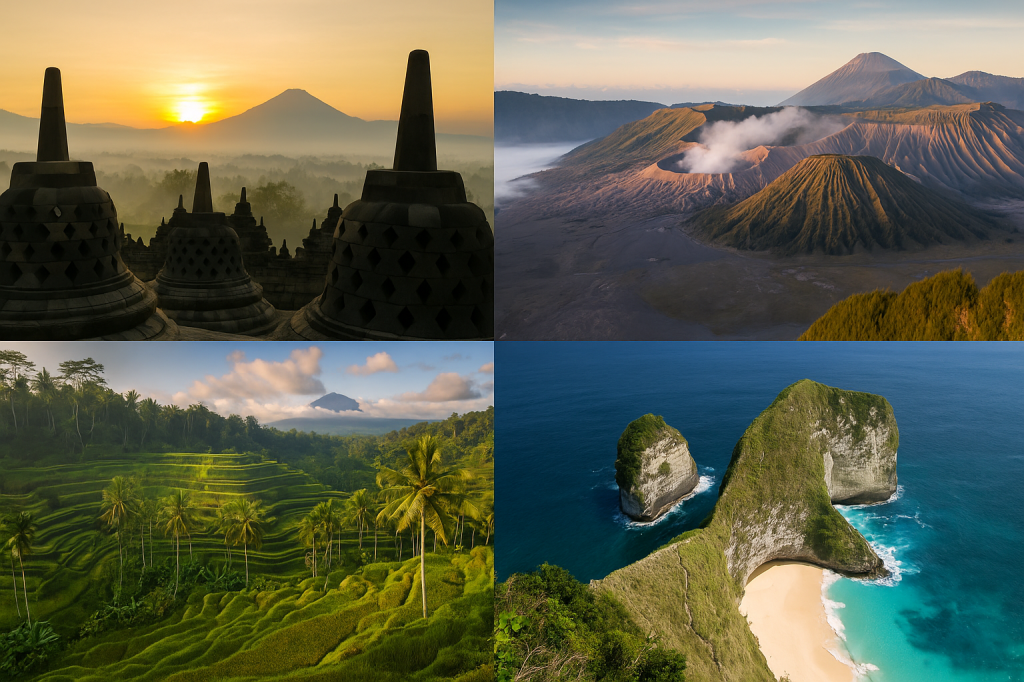
Indonesia, a sprawling archipelago with over 17,000 islands, is one of the most vibrant and diverse countries you’ll ever visit. Whether you’re wandering through ancient temples, lounging on white-sand beaches, trekking volcanoes, or experiencing the bustling city life, Indonesia has something for every kind of traveler. The beauty of this country lies not just in its landscapes, but in the richness of its culture and history. From the most famous spots like Bali to the more hidden gems like Sumatra, here are the best places to visit in Indonesia.
Bali: The Island of the Gods
Bali is perhaps the most well-known destination in Indonesia, and for good reason. Known for its stunning beaches, vibrant arts scene, and spiritual culture, Bali truly offers a slice of paradise. Whether you’re into surfing on world-class waves, exploring ancient temples, or practicing yoga amidst lush landscapes, Bali delivers it all.
You’ll find a beautiful blend of traditional and modern culture here. Ubud, the cultural heart of Bali, offers peaceful rice terraces, ancient temples, and art galleries showcasing traditional Balinese art. In contrast, Seminyak and Kuta provide an exciting nightlife scene, trendy beach clubs, and luxurious resorts.
If you’re looking for more tranquility, venture to Uluwatu for its cliffs, dramatic ocean views, and quieter beaches perfect for sunbathing or yoga sessions. Meanwhile, Bali’s inland areas, like the sacred Monkey Forest and Mount Batur, offer unforgettable hikes and interactions with nature. If you’re into temples, don’t miss the iconic Tanah Lot, perched on a rocky sea temple, or the stunning Uluwatu Temple.
Jakarta: The Bustling Capital
While Bali attracts tourists for its serene atmosphere, Jakarta—Indonesia’s capital city—is a fast-paced metropolis with a different charm. If you’re a fan of city life and want to explore the urban side of Indonesia, Jakarta is the place to be. The city is a blend of modern skyscrapers and historic landmarks, offering an intriguing mix of old and new.
Visit the National Monument (Monas) for a view of the city skyline, or stroll around Kota Tua, Jakarta’s Old Town, where Dutch colonial architecture stands tall against the backdrop of busy streets. For a cultural dive, head to the Museum Nasional to see Indonesia’s rich history, or visit the Istiqlal Mosque, Southeast Asia’s largest mosque. Jakarta also has some of the best shopping malls in Asia, including Grand Indonesia and Plaza Indonesia, where you can shop for everything from high-end brands to local crafts.
As a city that never sleeps, Jakarta offers an exciting food scene too, with street food stalls offering everything from spicy satay to noodle soups. Don’t forget to try local dishes like Gado-Gado, Nasi Goreng, and Bakso!
Yogyakarta: The Heart of Java
Yogyakarta, or “Jogja” as locals call it, is another incredible place to visit in Indonesia, especially if you’re a history buff. Known as the cultural capital of Java, Yogyakarta is home to two of the most significant UNESCO World Heritage Sites: Borobudur and Prambanan. These ancient temples, some of the largest and most impressive in the world, draw visitors from all over the globe.
Borobudur is a massive Buddhist temple, intricately carved and surrounded by stunning views of the surrounding countryside. The sunrise trek to Borobudur is one of the most magical experiences, offering the chance to witness the sun rise behind the ancient stupas and over lush green fields.
Prambanan, on the other hand, is a Hindu temple complex, characterized by its towering spires and detailed relief sculptures. This historical site offers visitors a glimpse into Indonesia’s rich spiritual and architectural heritage.
Aside from the temples, Yogyakarta is known for its vibrant street life, where you can try traditional Javanese batik, shop at local markets, and explore the Sultan’s Palace (Kraton). For nature lovers, the nearby Merapi volcano offers hiking opportunities, while the stunning beaches of Parangtritis give you a taste of Java’s coastal beauty.
Komodo Island: Meet the Dragons
Komodo Island, located in the heart of the Indonesian archipelago, is perhaps best known for being home to the world’s largest lizard, the Komodo dragon. But there’s so much more to this stunning island than its iconic inhabitants. The island is part of Komodo National Park, a UNESCO World Heritage Site, and offers a combination of wildlife, breathtaking landscapes, and clear turquoise waters perfect for snorkeling and diving.
To witness the legendary Komodo dragons in their natural habitat, a trek through the island’s dry, rugged terrain is a must. These reptiles can grow up to 10 feet in length and are a sight to behold as they roam freely around the island. But Komodo isn’t just about dragons—its surrounding waters are also home to incredible marine life, making it one of the best diving spots in Indonesia. Dive into the pristine waters and you’ll encounter vibrant coral reefs, sea turtles, manta rays, and a multitude of tropical fish.
Beyond the wildlife, Komodo Island offers some of the most picturesque beaches in Indonesia. Pink Beach, for example, gets its name from the soft, pink-hued sand that stands out against the blue waters and green hills. It’s an incredibly photogenic spot, and perfect for a day of relaxation or a swim.
Sumatra: Untamed Beauty
If you’re looking for raw natural beauty and wildlife encounters, Sumatra is the place to go. Known for its vast rainforests, volcanic landscapes, and deep lakes, this island is a paradise for nature lovers and adventurers. Sumatra’s famous Lake Toba, the world’s largest volcanic lake, is a serene spot where visitors can relax and take in the surrounding scenery. The lake is set in the caldera of a supervolcano, and its vast size and peacefulness make it a perfect place to unwind.
But the real gem of Sumatra is its wildlife. The island is home to orangutans, tigers, and elephants, with the Gunung Leuser National Park being a prime destination for orangutan trekking. You can take guided treks into the dense forest and spot these critically endangered creatures in their natural habitat. Sumatra’s jungles are also a haven for eco-tourism, and many tours focus on sustainable travel and animal conservation.
For a more active adventure, you can hike the majestic Mount Sinabung or Mount Kerinci, two of the most active volcanoes in Indonesia. The treks are challenging, but they reward you with some of the most spectacular views on the island.
Lombok: The Quieter Island
Lombok, located just east of Bali, is often considered a quieter, more relaxed alternative for those who want to escape the crowds without sacrificing the beauty of the beaches and mountains. Lombok is famous for its pristine beaches, many of which are untouched and far less touristy than Bali’s hotspots.
One of the main attractions in Lombok is Mount Rinjani, an active volcano that is Indonesia’s second-highest peak. The trek to the summit of Rinjani is challenging, but it offers incredible views over the surrounding landscape, including the stunning Segara Anak Lake at the crater. For those looking for something more laid-back, the beaches of Senggigi and the Gili Islands offer crystal-clear waters perfect for snorkeling, diving, or simply lounging by the shore.
Lombok is also known for its traditional Sasak culture, which visitors can experience in local villages. You can explore ancient mosques, visit traditional markets, and learn about the island’s unique customs.
Sulawesi: A Blend of Culture and Nature
Sulawesi, located in central Indonesia, is one of the country’s most diverse and fascinating islands. From its unique shape (it looks almost like an extended “K”) to its varied landscapes, Sulawesi offers a wealth of experiences for travelers.
The island is perhaps best known for its cultural diversity. The Toraja people of South Sulawesi are famous for their elaborate funeral ceremonies and distinctive architecture. Visiting the Toraja region offers a glimpse into this unique culture, with traditional houses and tombs carved into cliffs or hidden in caves. The elaborate ceremonies, held at various times of the year, are a spectacle of color and ritual, drawing visitors from all over the world.
Sulawesi is also known for its stunning natural beauty. Bunaken National Marine Park, off the coast of North Sulawesi, is one of the world’s top diving destinations, offering vibrant coral reefs and a rich diversity of marine life. For a more adventurous experience, you can trek through the lush rainforests of Lore Lindu National Park, home to rare species of wildlife and birdlife, including the endangered anoa and the Sulawesi hornbill.
The Gili Islands: A Hidden Paradise
The Gili Islands, located just off the coast of Lombok, are a tropical paradise that offers an escape from the hustle and bustle of daily life. Comprised of three islands—Gili Trawangan, Gili Meno, and Gili Air—these islands are renowned for their laid-back vibe, crystal-clear waters, and vibrant marine life.
Gili Trawangan, the largest and most developed of the three, offers an array of bars, restaurants, and beachfront resorts. It’s the ideal spot for travelers looking for a bit of nightlife along with their beachside relaxation. Gili Meno, on the other hand, is perfect for those seeking a quieter and more serene escape, with fewer tourists and an idyllic setting. Gili Air offers a balance between the two, with a charming atmosphere and plenty of options for activities like snorkeling, diving, and kayaking.
The Gili Islands are a haven for marine life. The waters are teeming with turtles, colorful fish, and coral reefs. Whether you’re diving into the deep blue or snorkeling near the shore, the underwater world here is simply magical.
Raja Ampat: A Diver’s Dream
Located off the coast of Papua in Eastern Indonesia, Raja Ampat is one of the most remote and pristine areas in the world. Known for its incredible biodiversity, this region is a diver’s dream come true. The islands are home to the most biodiverse marine ecosystem on the planet, making it a top destination for underwater enthusiasts.
Raja Ampat offers some of the best diving sites in the world. The underwater visibility is exceptional, and divers are often treated to sights of manta rays, reef sharks, and a kaleidoscope of tropical fish and coral species. For those who aren’t into diving, Raja Ampat also offers great snorkeling, kayaking, and birdwatching opportunities.
In addition to its marine life, Raja Ampat also boasts breathtaking landscapes. The islands are characterized by dramatic karst limestone formations, emerald green waters, and dense rainforests. It’s a place where nature remains untouched, and visitors can truly feel like they’re experiencing a world away from the modern one.


Leave a Reply